Is that a Fish in Your Ear — Review

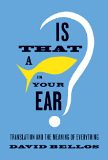
Is That A Fish In Your Ear Cover

When we arrived back to England, I had a friend loan me a copy of Is That a Fish In Your Ear by David Bellos.  We had been talking about translation and what that meant when he mentioned it.  Here’s a review of it; however, first off, before we left the US to go live in Serbia, I had never learned another language.  Sure, I had a year of Spanish on my high school transcript; but I didn’t know any more than I learned living in Texas.  Even more than that, I thought it was a sheer waste of time for a generic American to learn a foreign language.  Think about this….who are you going to talk to?  You can travel thousands of miles in any direction and only meet people whose first language is English.  Even if you travel abroad on holiday, you might learn a few words, but come on…except for France, you are going to find many people willing to speak English to you and help you out.  The only time it really ever became important to me to learn a language was moving to Serbia.  This caused me to see that “translation” means different things at different times.  On to the book.

This book was good great.  I read it in about 3 hours on a plane (now I see why my dad read so much).  I only have two complaints (I’ll detail those below); however, everything David Bellos said, I had seen or realized while learning Serbian.  In one case, he takes a poem in Chinese then spends two pages showing different translations.  Some would say that not all were translations; however, depending upon what the author and translator needed or wanted to keep intact, they all were valid.

In addition, he talked about how translators work.  As an example, he used poetry and movie titles.  I had noticed that movie titles aren’t always translated (sometimes they are redone entirely).  This also applies to phrases like “human rights.”  Sometimes, a direct translation has undesirable connotations so they choose something else that applies more directly to the “thoughts” of the movie or phrase.

On to my two gripes:  Bible Translation and language history.  Mr. Bellos lumped Bible translation in with every other kind of translation.  The Bible says that God “moved” (aka inspired) the writers of the Bible to write down what God wanted written down (see 2 Tim. 3:16-17).  Most reliable Bible scholars believe this means that God told the men to write down exactly what He wanted written down (similar to a secretary transcribing a letter that her boss is dictating) but not exactly.  God told the men what to write; however, it was written by the men (in their “style” and with words to suit their personality).  See, the secretary doesn’t have leeway to “rephrase” what her boss says, but God can use people this way because He knows us better than He knows ourselves.  This means that more than just the idea of what the Bible says is important…the words are important as well.  Yes, translators can’t often say everything exactly how the authors wrote it (Mr. Bellos says this) but, in the case of the Bible, they can’t play fast a loose with what they have (as he did in some cases of the Chinese poem).
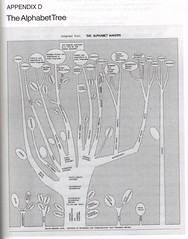
Language Tree

He then goes on and talks about language history.  He starts with the account of the Tower of Babel and says it is because of this that so many people have tried to find the “original” language.  For this reason, language trees have grown up.  Mr. Bellos does not believe the Biblical account and pokes holes in it; however, he makes one false assumption that clouds his judgement:  he assumes that the new languages were related somehow.  The Bible doesn’t say they were so we cannot assume they were.  Why couldn’t God have just made one group for each branch of the language tree?  That fits with 1)the Bible and 2)what we see today.

In spite of my two complaints, I enjoyed the book very much.  It was well written, easy to read, and covered the subject very well.

Disclosure:  The book links on this page are for the Kindle version and are through my Amazon Associates account (this means I’ll get a small percentage of the sale if you buy the book by clicking the link).
Perhaps

Gasolina

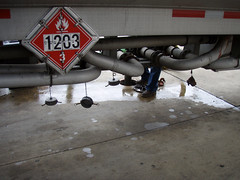
Tomorrow we’ll know if there will really be a petrol lorry strike or not.  Last time, we only heard they voted for a strike but didn’t set a date.  From the Telegraph:

Officials from the tanker drivers’ union Unite turned down the deal which was thrashed out during six days of talks between the union and representatives of six fuel distribution companies.

and

The union will have to name strike dates, or other forms of industrial action, by Friday afternoon unless employers agree to extend the deadline.

What will happen this time? More panic buying?  More people taking reasonable steps to provide for their own good? More queues for 999 services?

Image from daquella manera via flickr

What side of the sidewalk/pavement do you walk on?

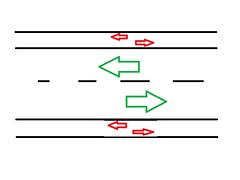
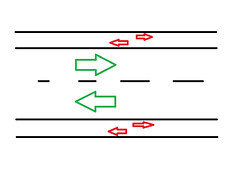
Ok, below are two pictures based on how I try to walk given the traffic direction.  If you walk this way, the inside person (closest to traffic) is always walking into traffic.  This lets them avoid any oncoming cars that are too close.  But it never seems to work out this nice.  My question is….which side of the sidewalk (or pavement) do you walk on and why?

USWalk EnglandWalk
In the US In the UK

Drought, Hosepipe ban, and wells (boreholes)

And the rain starts

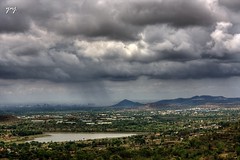
We are currently under a hosepipe ban because of a drought condition in southeast England.  This morning, I read this article saying there has been an increase in boreholes (wells).

Now, is this a solution? Not really because, eventually, the wells will dry up too.  It also takes water away from everyone else.  However, instead of doing something simple, I can see the government here adopting a solution like Colorado where private landowners don’t own the rain that falls on their property (there’s lots of historic reasons for this).

[Update 2012-06-13 12:14:16] This has turned into the wettest drought I have ever seen.

Image from yogentra174 via flickr

200 years since the US defeated the British…again

USS Constitution

2012 marks 200 years since the start of the War of 1812.  This is the second war the US fought against the British Empire for our freedom.  In that war, the British captured Washington DC and burnt the White House.  It was also in this war when the National Anthem–The Star Spangled Banner–was written (in 1814).

Hadn’t thought about this bit of history until I read this article. About the war, it says:

In the war American forces, with its small naval fleet, prevailed against the British and the vaunted Royal Navy. The victory was instrumental in establishing the United States as a formidable military force and solidified the country’s claim to the Louisiana Purchase, effectively doubling the size of the nation.

and

“The victory had a galvanizing effect on the whole country,” Wiese said. “The aftermath of the War of 1812 is when you first begin to see a cohesive sense of national identity.”

Image from boston public library via flickr

I think it is for…

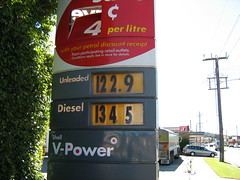
Petrol

… convenience over anything else.  People don’t want to stop more than once and the stations at supermarkets let them do that.  Some of them–Tesco and Sainsbury’s–even give rewards for purchasing fuel at their stations.  I know that is why we do it (just to clarify, the convenience is what I’m referring to here.  One stop is better than 2 or 3.)

I also think it is about regulation.  In the states, there’s much more regulation now on gas stations than there used to be.  That drove most of the mom and pop stores out of business.

How about you?  Do you get your fuel/gas/petrol at WalMart (or the like)?  If so why?

This is in response to this article about supermarkets having almost 1/2 of the filling stations in the UK.

Image from the real yomcat via flickr

Insane Rainstorm

This is insane…..  Go to the 57 sec mark when they rotate…it’s like they fly into a huge rain band.

I’m glad…

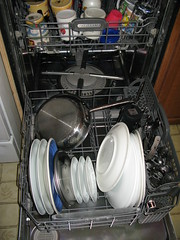
40.2009 365 Dishwasher Duty

…that I’ve always thought it was a waste of time.  Once Cyndi and I started renting places that had dishwashers, I’ve never wasted my time rinsing dishes.  I’m glad.  See this article on the Consumerist and Consumer Reports.  (If the dishes didn’t come clean, I’d just leave them in there for a second go).

Image from nj tech teacher via flickr