Well, if you are American, you’ll say it is “My Country Tis of Thee.” If you are British (or Canadian, Australian, etc…) you’ll say it is “God save the Queen“. Oh, and if you are English, it is your national anthem. I hadn’t thought much of it (because you don’t hear it all that often) but we’ve heard it quite often recently with the kickoff of Queen Elizabeth’s Diamond Jubilee.
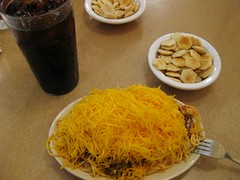
Yesterday, I opened a can of Skyline Chili, made spaghetti, sliced an onion, and had skyline. It was good. Not quite as good as being there, but it was good.
If you’ve never been to one, you should–can’t believe I’m saying this–head to Ohio and have some. I’d recommend the 4 way with onions (and don’t forget the hot sauce).
This morning, while on the way to work, I saw a truck. Not just any truck mind you, but a truck that looked like it carried fuel. As I got closer, I saw it was a fire truck. I snapped this picture with the intent of blogging about this later today.
In my mind, this truck epitomises what I’m going to write about. Look at the truck and imagine seeing it from a distance. What is the job of the truck? By its general shape, I first guessed that it was a fuel truck (don’t ask me why I thought a fuel truck would be parked along the road in a residential section of town). But then as I got closer, I saw the words FIRE on the front. Obviously, the truck is meant to carry water so a fire can be put out. But it doesn’t look like it. It looks like a truck one might use to start a fire. :^)
This is where much of the stress of living overseas–or for that matter just moving to a different town–comes from. Things that look like one thing turn out to be something different. And if you go looking for something, you may not find it because it doesn’t look like you expect.
This brings me to something important: after moving over 21 times and living overseas for more than 5 years (as of 2012), moving is moving is moving. Within the US you move and have to learn things: where the hospital is, where the store is, what place has the cheapest gas, how to live without Skyline Chilli in a place where they’ve never heard of it (I know…can you imagine a place like that). You just simply have to adjust. Moving overseas is the same.
Before you say something like”but you live in a country where they speak English” let me remind you that we spend 2.5 years in Serbia where they didn’t. Sure, that added a bit of stress, but, in general, the skills I learned moving 21+ times in the US helped me. They also helped me help Cyndi.
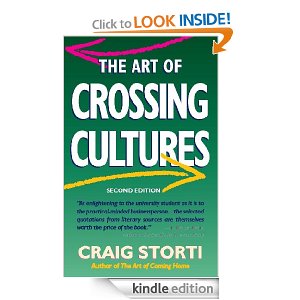
This leads me to the best book I’ve ever read about moving abroad: The Art of Crossing Cultures by Craig Storti. In this book, Storti points out several things….my point being one of them. Sure, there will be some extra stress brought on by what I mentioned above; however, once I remind myself that this isn’t America and things will be different, I’m good to go.
Storti also talks about other things. I may write about that in the future. If I do, this post will have a link to the new article.
I got an email around the beginning of the week from Starbucks telling me I could try their new Mocha Cooke Crumble Frappuccino before it was released tomorrow. Well, Cyndi and I popped in yesterday to try one.
It was good; however, I don’t know if I’ll get one again. While it had a great chocolate flavor, I was hoping for a more creamy milkshake/thickshake mouth-feel. Overall though, if you like chocolate, go for it.
P.S. No, I didn’t get it for free…I had to pay for it 🙂
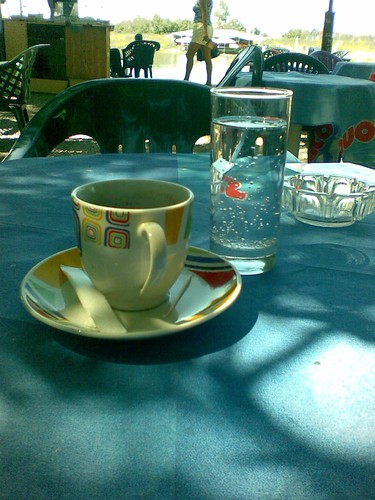
I made this post last week about bad turkish coffee. Want to know what the good stuff is like? Here’s a picture. This is Turkish/Serbian Coffee at our favorite cafe by the Morava. Cyndi and I really miss this part of life in Cacak….
When we arrived back to England, I had a friend loan me a copy of Is That a Fish In Your Ear by David Bellos. We had been talking about translation and what that meant when he mentioned it. Here’s a review of it; however, first off, before we left the US to go live in Serbia, I had never learned another language. Sure, I had a year of Spanish on my high school transcript; but I didn’t know any more than I learned living in Texas. Even more than that, I thought it was a sheer waste of time for a generic American to learn a foreign language. Think about this….who are you going to talk to? You can travel thousands of miles in any direction and only meet people whose first language is English. Even if you travel abroad on holiday, you might learn a few words, but come on…except for France, you are going to find many people willing to speak English to you and help you out. The only time it really ever became important to me to learn a language was moving to Serbia. This caused me to see that “translation” means different things at different times. On to the book.
This book was good great. I read it in about 3 hours on a plane (now I see why my dad read so much). I only have two complaints (I’ll detail those below); however, everything David Bellos said, I had seen or realized while learning Serbian. In one case, he takes a poem in Chinese then spends two pages showing different translations. Some would say that not all were translations; however, depending upon what the author and translator needed or wanted to keep intact, they all were valid.
In addition, he talked about how translators work. As an example, he used poetry and movie titles. I had noticed that movie titles aren’t always translated (sometimes they are redone entirely). This also applies to phrases like “human rights.” Sometimes, a direct translation has undesirable connotations so they choose something else that applies more directly to the “thoughts” of the movie or phrase.
On to my two gripes: Bible Translation and language history. Mr. Bellos lumped Bible translation in with every other kind of translation. The Bible says that God “moved” (aka inspired) the writers of the Bible to write down what God wanted written down (see 2 Tim. 3:16-17). Most reliable Bible scholars believe this means that God told the men to write down exactly what He wanted written down (similar to a secretary transcribing a letter that her boss is dictating) but not exactly. God told the men what to write; however, it was written by the men (in their “style” and with words to suit their personality). See, the secretary doesn’t have leeway to “rephrase” what her boss says, but God can use people this way because He knows us better than He knows ourselves. This means that more than just the idea of what the Bible says is important…the words are important as well. Yes, translators can’t often say everything exactly how the authors wrote it (Mr. Bellos says this) but, in the case of the Bible, they can’t play fast a loose with what they have (as he did in some cases of the Chinese poem).
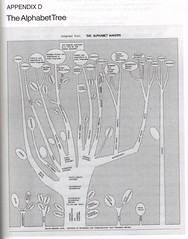
He then goes on and talks about language history. He starts with the account of the Tower of Babel and says it is because of this that so many people have tried to find the “original” language. For this reason, language trees have grown up. Mr. Bellos does not believe the Biblical account and pokes holes in it; however, he makes one false assumption that clouds his judgement: he assumes that the new languages were related somehow. The Bible doesn’t say they were so we cannot assume they were. Why couldn’t God have just made one group for each branch of the language tree? That fits with 1)the Bible and 2)what we see today.
In spite of my two complaints, I enjoyed the book very much. It was well written, easy to read, and covered the subject very well.
Disclosure: The book links on this page are for the Kindle version and are through my Amazon Associates account (this means I’ll get a small percentage of the sale if you buy the book by clicking the link).
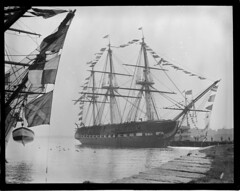
Hadn’t thought about this bit of history until I read this article. About the war, it says:
In the war American forces, with its small naval fleet, prevailed against the British and the vaunted Royal Navy. The victory was instrumental in establishing the United States as a formidable military force and solidified the country’s claim to the Louisiana Purchase, effectively doubling the size of the nation.
and
“The victory had a galvanizing effect on the whole country,” Wiese said. “The aftermath of the War of 1812 is when you first begin to see a cohesive sense of national identity.”
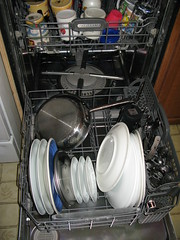
…that I’ve always thought it was a waste of time. Once Cyndi and I started renting places that had dishwashers, I’ve never wasted my time rinsing dishes. I’m glad. See this article on the Consumerist and Consumer Reports. (If the dishes didn’t come clean, I’d just leave them in there for a second go).
In 1986, we moved to Hermann, MO. After a month or so in an apartment, we moved to a house on highway 100 west that was almost to Gasconade, MO. It was right after this sharp turn in the road (here’s a link to it on google maps). My mom would remember the first time there was a squeal, crash, then a nock, and an ask for a tow, but I remember it happening occasionally. See, this turn was more than 90 degrees and it snuck up on you. Sure there was a sign, but those are just approximate, right? This one wasn’t and was hidden behind a small dip so once you saw it you couldn’t get on the brakes fast enough. There were also 3 or 4 trees on the outside of the turn that would stop you from running into Delmer’s barn. Here’s a view of it today (from google street view) looking back towards Hermann:
Here’s two views of the house I’ve lived in longer than I’ve lived anywhere else (7 years until my junior year of high school):
When we lived here, there used to be this MASSIVE pecan tree (that made little pecans) here. One time, there was a tornado and 1/3 of the tree fell over on the house.
I stood here and waited on the bus.
Now, I’ve still got friends there. One of them posted a link to an article in a local newspaper about a truck getting stuck. He was trying to make a left turn from J road onto hwy 100. Insane. When we lived there, I wouldn’t even make that turn in a car. I would have been to worried that someone would come around the turn too fast, miss it,and hit me. Here are a few pictures she took of the trailer being high-centered:
I like green Kool-Aid. It is the best of all the flavors. I also like my soda stream that Cyndi got me. Today, I combined the two. I made carbonated kool-aid. It was different and I probably won’t do it again. I mean it tasted ok…after the fiz left in my mouth. But before that, it just tasted…well…funny. Here’s some pictures.